
 Language


More Language
Language
In modern industry, steel plates serve as a widely used foundational material across multiple sectors, including construction, automotive, and home appliances. Among the options available, galvanized steel plates and plain steel plates represent two common types. Though both fall under the category of steel, they exhibit significant differences in composition, manufacturing processes, properties, and applications. Understanding these distinctions enables more informed selection in practical scenarios.
This article will delve into the primary distinctions between galvanized steel plates and ordinary steel plates, providing a comprehensive overview from multiple perspectives.

Galvanized steel plates use ordinary steel plates as their base material. Through processes like hot-dip galvanizing or electrogalvanizing, a protective zinc layer is formed on their surface. The zinc coating primarily consists of zinc, though trace amounts of aluminum (Al) and magnesium (Mg) may be added to enhance performance. This protective layer enables galvanized steel plates to effectively resist oxidation and corrosion.
Main Components:
- Steel substrate: Plain steel plate
- Coating: Zinc (Zn), potentially containing trace amounts of aluminum (Al) and magnesium (Mg) (Mg)
Plain steel plate primarily consists of iron and carbon. Depending on its intended application, it may also contain trace amounts of manganese (Mn), silicon (Si), phosphorus (P), sulfur (S), and other elements. Its chemical composition is relatively simple, mainly an iron-carbon alloy, offering high strength and hardness. However, its corrosion resistance is inferior to that of galvanized steel plate.
Main Components:
- Steel Matrix: Iron (Fe) and Carbon (C)
- Alloying Elements: Trace amounts of Manganese (Mn), Silicon (Si), Phosphorus (P), Sulfur (S)
The production process for galvanized steel plates is more complex than that for ordinary steel plates. First, ordinary steel plates undergo fundamental iron and steel production processes (including iron smelting, steel making, rolling, etc.). Subsequently, a zinc layer is applied to the steel plate surface via hot-dip or electroplating methods.
- Hot-dip galvanizing: The steel plate is immersed in molten zinc, forming a zinc coating on its surface. Hot-dip galvanizing offers superior adhesion and durability, making it suitable for outdoor or harsh environments.
- Electrogalvanizing: Zinc is deposited onto the steel surface through electrolysis from an electrolyte solution. While electrogalvanized steel has a smoother appearance, its corrosion resistance is slightly inferior to hot-dip galvanized steel.
The manufacturing process for plain steel plates is relatively simple. It primarily involves refining pig iron from iron ore, removing impurities through steelmaking, and finally rolling molten steel into plates of various thicknesses and specifications. Their surfaces lack additional protective coatings, resulting in weaker environmental resistance.
The zinc coating provides excellent corrosion resistance by effectively isolating oxygen and moisture in the air, preventing rust and corrosion. It is particularly suitable for humid environments and long-term outdoor applications such as roofs, exterior walls, and vehicle underbodies.
Key Features:
- Strong corrosion resistance: The zinc layer effectively protects the base material, extending service life.
- Smooth surface: Galvanized steel plates have a relatively flat surface with aesthetic appeal, suitable for applications requiring visual appeal.
- Oxidation resistance: When exposed to air for extended periods, the zinc coating effectively delays oxidation, reducing metal corrosion.
Plain steel plates generally outperform galvanized steel plates in structural mechanical properties, particularly in strength, hardness, and tensile resistance. However, they exhibit significant disadvantages in corrosion and oxidation resistance, prone to rusting and corrosion when exposed to humid environments for extended periods.
Key Characteristics:
- Poor corrosion resistance: Lacking additional protective coatings, it is susceptible to erosion by external moisture and oxygen.
- Superior mechanical properties: Possesses good strength and hardness, suitable for applications requiring high load-bearing capacity or further processing.
- Rough surface: The surface of ordinary steel plates is generally less smooth than galvanized steel plates, presenting a relatively coarse appearance.

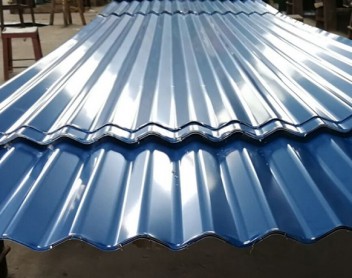
Due to their excellent corrosion resistance and appealing appearance, galvanized steel plates are widely used across multiple industries including construction, automotive, and home appliances. They serve as a crucial material in construction applications such as roofing, wall cladding, and ventilation ducts. Additionally, galvanized steel plates are commonly employed in manufacturing appliance housings, automotive bodies, and chassis components.
Primary Applications:
- Construction Industry: Used for roofs, walls, metal doors and windows, widely applied in low-rise buildings and industrial facilities.
- Automotive Industry: Serves as material for critical components like car bodies and chassis, offering outstanding corrosion resistance.
- Home Appliance Industry: Employed for outer casings and inner linings of appliances such as refrigerators, washing machines, and air conditioners.
- Furniture Sector: Extensively utilized in manufacturing office furniture and kitchen equipment.
Ordinary steel plates, characterized by lower cost and high strength, are typically used in scenarios with less stringent corrosion resistance requirements. They are extensively applied in mechanical manufacturing, building structures, bridges, scaffolding, and similar fields. In these applications, steel plates primarily serve load-bearing and support functions.
Primary Applications:
- Construction Industry: Used for building frameworks, steel structures, and other components with moderate corrosion resistance needs.
- Mechanical Manufacturing: Widely applied in mechanical components requiring strength and hardness, such as automotive parts and machinery equipment.
- Structural Components: Suitable for various bridges, supports, and other structural elements requiring strength reinforcement.
Galvanized steel plates incur relatively higher production costs due to the additional galvanizing process. Particularly with hot-dip galvanizing, which involves high-temperature zinc bath processing and significant equipment investment, galvanized steel plates generally cost more than plain steel plates.
Plain steel plates employ simpler production processes without additional coating treatments, resulting in lower costs. They are suitable for applications with minimal aesthetic or corrosion resistance requirements.
Galvanized steel plates and ordinary steel plates each possess distinct advantages and suitable applications. Galvanized steel plates outperform ordinary steel plates in corrosion resistance, appearance, and aesthetics, making them suitable for various environments requiring corrosion protection. Conversely, ordinary steel plates offer advantages in mechanical properties and cost, making them suitable for most general industrial applications where corrosion resistance is not a primary requirement.
When selecting steel plates, it is essential to comprehensively consider material properties, application environments, and budget based on specific needs. For applications involving prolonged exposure to moisture or corrosive environments, galvanized steel plates are undoubtedly the more suitable choice. Conversely, for scenarios demanding high strength but minimal corrosion resistance, plain steel plates offer a more cost-effective solution.
With ongoing technological advancements, the production processes and material properties of both galvanized and plain steel plates continue to improve. Future innovations in steel plate materials will further address the diverse needs of various markets.
China galvanized plate manufacturer: Boxing Shuangshengda Steel specializes in galvanized sheet, galvanized steel plate,Colour steel plate etc.We have a full range of product specifications and types, low prices, and more than 20 years of experience, worthy of your trust

 Address:Bo Xing County, Shandong Province
 E-mail: