In diversified fields such as architectural decoration, home appliance manufacturing, and transportation, printed color steel plates are emerging with their unique beauty and functionality. This innovative material that perfectly integrates metal substrates with colorful coatings not only breaks through the single visual limitations of traditional steel plates, but also achieves triple improvements in corrosion resistance, weather resistance, and decorative properties through advanced surface treatment technology. The following is an explanation from four dimensions: composition, process, performance, and application:
1. Composition and Classification
The core structure of printed color steel plate consists of three parts: substrate, coating, and coating. The substrate is usually made of cold-rolled steel plate or hot-dip galvanized steel plate. The former has high strength but weak corrosion resistance, while the latter enhances its anti-corrosion performance through a galvanized layer. The coating is made of organic materials such as polyester, silicon modified polyester, and high weather resistant polyester, with a thickness generally ranging from 15-25 microns. According to the differences in printing processes, it can be divided into direct printing type (printing patterns directly after coating) and transfer printing type (transferring patterns to the coating through a transfer film), the latter of which can achieve more complex texture effects.
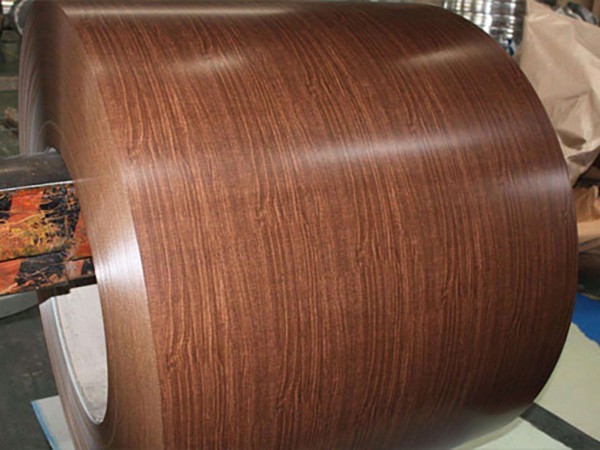
2. Core manufacturing process
The production process includes four steps: substrate pretreatment, coating, printing, and curing. The substrate needs to undergo degreasing and chemical conversion treatment to form a corrosion-resistant bottom layer; The coating is uniformly covered by roller coating or spray coating, and forms a protective film after baking and curing; The printing process adopts gravure printing or digital printing technology to accurately transfer the design pattern to the coating surface; Finally, the ink and coating are tightly bonded through high-temperature curing, ensuring color durability and wear resistance. The entire process requires strict control of temperature, speed, and tension parameters to avoid coating cracking or pattern deformation.
3. Performance advantages
Printed color steel plates combines functionality and decoration. Its corrosion resistance can reach more than 10 years, suitable for coastal or high humidity environments; The coating has a hardness of over 2H and strong scratch resistance; The printing pattern has high resolution and can simulate natural textures such as wood grain and stone, meeting personalized design needs. In addition, the material is lightweight (about 6-12 kilograms per square meter), easy to transport and install, and has a recycling rate of over 90%, which meets green building standards.
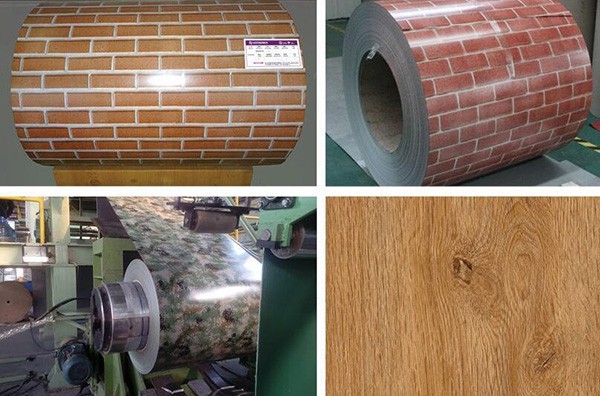
4. Application Fields
This material is widely used in fields such as building curtain walls, interior decoration, home appliance casings, and transportation vehicles. For example, in commercial complexes, printed color steel plates can replace traditional stone or aluminum plates, achieving lightweight and low-cost maintenance; In the home appliance industry, it simulates metal wire drawing effects through printing technology to enhance product texture; In the field of new energy, some enterprises use weather resistant printed steel plates to make photovoltaic brackets, balancing anti-corrosion and aesthetic needs.
News Conclusion
Printed color steel plates, with advanced coating technology, precisely composite high-performance resins and environmentally friendly pigments on the surface of metal substrates, forming a multifunctional coating that combines anti-corrosion protection, long-lasting color, and decorative aesthetics. Its coating adhesion meets the international level 0 standard, its weather resistance meets the long-term use requirements in extreme weather environments, and its color stability is significantly improved compared to traditional materials. With the dual pursuit of material functionality and aesthetic value in the construction industry, printed color steel plates have expanded from basic exterior wall decoration to innovative application fields such as photovoltaic integration and intelligent temperature control, becoming the core material choice for high-end industrial buildings, commercial complexes, and cultural landmark projects.

 Language


 Address:Bo Xing County, Shandong Province
 E-mail: