
 Language


More Language
Language
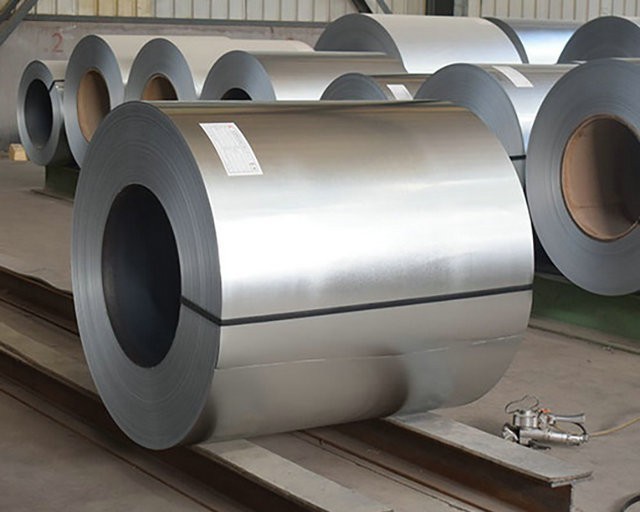
Galvanized plate, as a metal material with good corrosion properties, is widely used in many fields such as construction, home appliances and transportation. The thickness of galvanized plate is one of the key factors affecting its performance and service life. This article will discuss the thickness of galvanized plate and its related standards in detail, to help you better understand and use this material.

The thickness of galvanized plate mainly depends on the thickness of the substrate and the thickness of the zinc layer. Generally speaking, galvanized plate has a wide range of thickness of the original plate, depending on the production process and the needs of the application. For example, in industry and construction, the thickness of commonly used galvanized plates may range from 0.5 mm to 3.0 mm, while the thickness of the zinc layer varies depending on the standard. For example, the weight of the zinc layer of a common galvanized plate may range from 60g to 275g per square meter, which translates to a thickness of approximately 4μm to 20μm.
The thickness of the galvanized layer is also a factor that affects the overall thickness of the galvanized plate. The two main types of galvanizing are hot-dip galvanizing and electro-galvanizing. Hot-dip galvanizing has a thicker layer with good corrosion resistance, while electro-galvanizing has a relatively thin layer but a smoother surface. The thickness of the galvanized layer may also vary according to specific needs and standards.
The thickness of galvanized plate is closely related to its strength, corrosion resistance, and processability. Thicker substrates usually have a higher load-bearing capacity and are suitable for building structures or heavy machinery; thinner substrates are lighter and are suitable for appliances or decorative purposes. The thickness of the zinc layer has a direct impact on corrosion protection, with thicker layers providing longer protection cycles in wet or corrosive environments. However, too thick a zinc layer may cause cracking or peeling during processing, so a balance needs to be struck according to actual needs.
The thickness of galvanized plate usually ranges between 0.12mm and 6.0mm, depending on the application and industry standards. The following are common classifications:
0.12mm to 0.5mm, this thickness of galvanized plate is mainly used in some application scenarios with high requirements on material weight and cost, such as the manufacture of home appliances, electronic product shells and so on. Thin galvanized plate has better processing performance and anti-corrosion properties, while the cost is relatively low.
0.5mm~3.0mm, commonly used for building roofs and walls (e.g. 0.4mm~1.2mm) and general industrial equipment (e.g. 1.0mm~2.5mm). Galvanized plates in this thickness range are widely used in construction, automobile manufacturing and other fields. Medium-thickness galvanized plate has good strength and rigidity, and can meet the requirements for material properties in these fields.
3.0mm ~ 6.0mm, thick galvanized plate is mainly used in some application scenarios that require high material strength and abrasion resistance, such as heavy machinery and equipment, bridge construction and so on. This thickness of galvanized plate can withstand greater pressure and wear, to ensure the safety and stability of the equipment or structure.
** Chinese national standard (GB/T 2518-2019): the thickness range of cold rolled galvanized steel plate is 0.12mm~3.0mm, and the thickness of hot rolled substrate galvanized steel plate is 0.5mm~6.0mm. the standard specifies the tolerance requirements, for example, ±0.05mm deviation is allowed when the thickness is ≤0.5mm (refer to Article 5.2 of GB/T 2518-2019).
** American Standard (ASTM A653): Commercial Grade (CS), Structural Grade (SS), etc. Thicknesses cover 0.014 inch (0.36mm) to 0.25 inch (6.35mm), and galvanized layer designations range from G60 (zinc layer weight 60g/m2) to G210 (210g/m2).
** European Union Standard (EN 10346): Thickness grading is finer, e.g. DX51D+Z (general purpose) has a thickness of 0.3mm to 5.0mm, and the zinc layer is labeled as Z100 (100g/m2 on both sides), etc.
Reference basis: The national standard GB/T 2518-2019 “Continuous Hot-Dip Galvanized Steel plate and Strip” specifies the thickness tolerance and classification, and the international standard ISO 3575 provides a similar range.
|
Classification |
Typical thickness (mm) |
Common width (mm) |
Galvanized layer code |
Applicable scenes |
|
Cold rolled galvanized plate |
0.12-3.0 |
600-1250 |
Z60 (60g/m2) |
Household electric appliances, precision parts |
|
Hot rolled galvanized plate |
0.5-6.0 |
1000-1500 |
Z180 (180g/m2) |
Steel structures, containers |
|
Color coated galvanized substrate |
0.3-1.5 |
800-1200 |
Z120 (120g/m2) |
Building facade, roofing |
The thickness of galvanized plate is affected by a variety of factors, including the following:
(1) Anti-corrosion requirements: the thickness of the zinc layer (e.g. 80g/m2 or 275g/m2) and the thickness of the substrate need to be matched, and thicker substrates (≥0.6mm) are often chosen for outdoor buildings to enhance durability.
(2) Mechanical properties: 1.2mm~2.0mm galvanized plate is commonly used in the automotive industry, taking into account lightweight and crash safety (refer to “Automotive high-strength cold-rolled steel plate and strip” GB/T 20564).
(3) Processing technology: stamping and molding requires high ductility, thin plate (0.5mm ~ 1.5mm) easier to process; welded structure requires thicker plates (≥ 2.0mm) to avoid deformation.
(4) The material and thickness of the original plate: the material and thickness of the original plate will directly affect the overall thickness of the galvanized plate. Generally speaking, the original plate with a greater thickness will also have a greater thickness after galvanized.
(5) galvanizing method: as mentioned earlier, hot-dip galvanizing and electro-galvanizing two ways will produce different thickness of zinc layer, thus affecting the overall thickness of galvanized plate.
(6) Galvanizing solution temperature and dip plating time: these two factors also affect the thickness of the zinc layer. Generally speaking, the higher the temperature of the galvanizing solution and the longer the dipping time, the thicker the zinc layer will be.
- Construction field: 0.4mm~0.8mm is commonly used for roofing, 0.5mm~1.0mm is recommended for walls (calculated according to wind pressure and span).
- Home appliance manufacturing: refrigerator shell is mostly used 0.5mm ~ 0.8mm, washing machine inner tube selection 1.0mm ~ 1.5mm.
- Transportation: 0.7mm~2.0mm for car body; 2.0mm~4.0mm for container.
- Special environment: coastal, chemical environment should be selected thick substrate and improve the weight of the zinc layer to resist salt spray corrosion.
When selecting galvanized plate thickness, the following factors need to be considered:
(1) Application scenarios: Different application scenarios have different requirements for galvanized plate thickness. Need to choose the right thickness according to the actual use.
(2) Material properties: the thickness of galvanized plate will affect its strength, rigidity, corrosion resistance and other material properties. These performance indicators need to be balanced according to specific needs.
(3) Cost and budget: the thickness of galvanized plate will also affect its cost and price. Under the premise of ensuring performance requirements, it is necessary to consider the cost and budget factors to make a choice.
In summary, the thickness of galvanized plate is the result of a combination of factors. When selecting and using galvanized plate, comprehensive consideration needs to be made according to the specific application environment and performance requirements. By understanding the thickness of galvanized plate and its related standards, we can better grasp the performance characteristics of this material and provide strong support for its application in various fields.
China galvanized plate manufacturer: Boxing Shuangshengda Steel specializes in galvanized sheet, galvanized steel plate,Colour steel plate etc.We have a full range of product specifications and types, low prices, and more than 20 years of experience, worthy of your trust

 Address:Bo Xing County, Shandong Province
 E-mail: