
 Language


More Language
Language
In contemporary architecture, transportation, energy, and industrial manufacturing, galvanized steel finds extensive application in bridges, pipelines, building structures, transmission towers, traffic barriers, and domestic appliance casings due to its excellent corrosion resistance and high cost-effectiveness. The galvanized coating effectively isolates the steel substrate from air and moisture, preventing direct oxidation and thereby significantly extending the material's service life.
However, in varying environments, the zinc coating remains susceptible to oxidation, acid rain, salt spray, and mechanical damage. Without proper inspection and maintenance, its lifespan may be reduced from the theoretical 50+ years to a range of 10 to 20 years. Consequently, galvanized steel requires regular upkeep, particularly in coastal areas, regions with severe industrial pollution, or environments with high humidity.
Galvanized steel is ordinary carbon steel treated through a galvanizing process. This involves coating the surface with a layer of metallic zinc, creating a dual physical and electrochemical protective barrier. Zinc's reactive chemical nature enables it to react preferentially with oxygen and water vapour, forming a dense oxide film (ZnO) that prevents further steel corrosion. Depending on the process, it is primarily categorized into two types:
(1) Hot-dip galvanized steel: Steel is immersed in molten zinc (approximately 450°C), forming a 50-150 micron thick zinc layer with strong adhesion, suitable for outdoor environments.
(2) Electrogalvanized steel: A 5-30 micron zinc layer is deposited electrolytically onto the steel surface, resulting in a smoother finish. Commonly used in household appliances and automotive panels.
The zinc coating acts as a barrier against air and moisture. Even if locally damaged, the zinc continues to protect the steel through its ‘sacrificial anode’ function. According to the American Galvanized Steel Association (AGA), hot-dip galvanized steel can last 50-100 years in ordinary atmospheric conditions, far exceeding the 5-10 year lifespan of ordinary steel.

Although galvanized steel has an initial cost 10%-20% higher than ordinary steel, its long-term maintenance costs are extremely low. For instance, galvanized steel used in bridges can reduce coating maintenance costs by 90% (Source: International Zinc Association).
Galvanized steel can be stamped, welded, and bent, though care must be taken as the zinc coating has a relatively low melting point (approximately 420°C), requiring temperature control during welding. Electrogalvanized steel, with its uniform surface, is better suited for precision stamping.
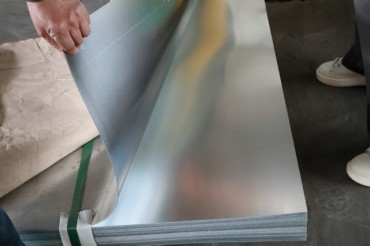
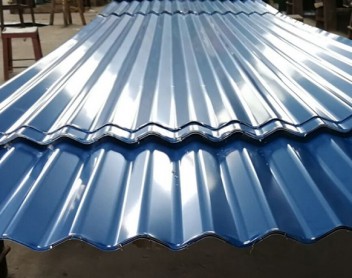
Hot-dip galvanized surfaces exhibit a silver-grey crystalline pattern (commonly termed ‘zinc flowers’), while electrogalvanized surfaces appear finer. Modern techniques also enable colored coatings (e.g., blue-white, green-yellow) through passivation treatment.
Zinc is 100% recyclable, and waste residues from galvanizing can be regenerated via the Waelz process. EU research indicates galvanized steel emits 60% less carbon than stainless steel (source: European Steel Technology Platform).
- Construction: Roofing, structural steel frameworks (galvanized coating ≥275g/m2, compliant with GB/T 13912 standard)
- Automotive: Body panels (electrogalvanized coating thickness 7-15 microns)
- Power transmission: Transmission towers (hot-dip galvanized corrosion protection lifespan ≥30 years)
A comprehensive inspection should be conducted every three months. In harsh environments (such as coastal or industrial zones), this should be reduced to monthly. According to NACE standards, remedial action is required when the galvanized coating thickness falls below 65μm.
- Galvanized coating integrity: Inspect for white rust (zinc corrosion products) or red rust (substrate corrosion). Address areas where white rust exceeds 10% coverage.
- Joints: Inspect bolted connections, welds, and other stress-concentration areas for loosening or cracking.
- Deformation and Loading: Check supports for bending or deformation, and verify that loads do not exceed design values (refer to GB 50017-2017 ‘Code for Design of Steel Structures’).
- Surface Debris Removal: Periodically rinse surfaces with clean water or neutral detergent (e.g., soapy water) to remove dust, grease, salts (in coastal areas), or chemical residues (in industrial zones). Avoid strong acids, alkalis, or abrasive cleaners.
- Tool Selection: Use soft cloths, sponges, or soft-bristle brushes; avoid hard tools like steel wool that may scratch the galvanized coating.
- Dry after rinsing: After rinsing with clean water, promptly wipe dry or allow to air-dry naturally to prevent water residue.
- Avoid scratches: During handling or installation, prevent contact with sharp objects, as damage to the galvanized coating reduces rust resistance.
- Stacking Protection: Separate sheets with soft padding during storage to prevent friction; ensure ventilation and dry conditions for long-term storage.
- Humid Environments: Increase cleaning frequency in high-humidity or coastal areas to prevent salt spray corrosion. Consider applying protective coatings (e.g., passivation treatment, rust-inhibiting oil).
- Chemical Exposure: Avoid contact with acids, alkalis, sulphides (e.g., fertilisers, battery electrolyte) or chloride ions (e.g., near swimming pools), as these substances corrode the zinc layer.
- Rust Inspection: Upon detecting localised rust spots, gently sand the affected area with fine-grade sandpaper. After cleaning, apply zinc powder paint or a specialised galvanized layer repair agent.
- Coating maintenance: If additional coatings (e.g., paint) are present on galvanized sheet surfaces, inspect for peeling and touch up promptly.
- Indoor storage: Prioritise dry, well-ventilated indoor environments. For outdoor storage, cover with waterproof sheeting to prevent rainwater accumulation.
- Prevent galvanic corrosion: Avoid direct contact with dissimilar metals (e.g., copper, iron) by using insulating materials to prevent electrochemical corrosion.
- White rust (zinc corrosion product): If white powder (zinc oxide) appears on the surface, clean with a stiff brush or diluted ammonia solution, then rinse thoroughly with water and dry.
- Post-welding or cutting: Promptly remove welding slag from cut edges and apply zinc-rich paint or anti-rust coating to protect exposed metal.
Avoid high temperatures: Prolonged exposure to temperatures exceeding 200°C may cause zinc coating detachment.

- Wipe with a soft cloth using a neutral detergent to avoid damaging the galvanized coating.
- For stubborn stains, apply a 5% acetic acid solution locally, then rinse immediately with clean water and dry thoroughly.
- Localised zinc replenishment: Apply cold galvanizing paint (zinc content ≥92%), ensuring the repaired area's thickness is no less than 80% of the original coating.
- Severe corrosion: When substrate corrosion depth exceeds 1mm, replace the damaged component.
- Conduct comprehensive protective coating renewal every 10 years to extend service life by over 15 years.
- Apply moisture-resistant coatings such as epoxy resin.
- Conduct inspections at least twice yearly to prevent zinc layer erosion from condensation.
- Elevate galvanized steel above ground level using support pads to avoid direct contact.
- Severe salt spray corrosion may damage galvanized coatings within 5 years.
- Establish protective distances (e.g., >50 metres from coastline, per ISO 12944-2).
- Apply PVDF coatings to enhance salt spray resistance.
- Corrosion accelerates in areas with acid rain or elevated SO? concentrations.
- Install acid rain protective sleeves on structures.
- When atmospheric SO? concentration exceeds 0.1 mg/m3, reduce maintenance intervals to monthly.
- White rust (initial oxide layer): Scrub with a stiff brush, clean with diluted ammonia solution, then rinse thoroughly with water.
- Red rust (substrate corrosion): Grind until the metal surface is bright, apply a zinc-rich primer, then coat with a topcoat.
- Post-welding or cutting: Exposed edges should be promptly sprayed with zinc powder paint to prevent localised corrosion spread.
- High-temperature environments: The galvanized coating may flake off above 200°C; prolonged exposure to high temperatures should be avoided.
In summary, galvanized steel plate is a high-quality material treated with zinc coating. Its outstanding corrosion resistance and longevity make it widely applicable across construction, industry, and other sectors. With ongoing technological advancements and process refinements, the performance of galvanized steel plate will continue to improve, bringing greater convenience to both production and daily life.
China galvanized plate manufacturer: Boxing Shuangshengda Steel specializes in galvanized sheet, galvanized steel plate,Colour steel plate etc.We have a full range of product specifications and types, low prices, and more than 20 years of experience, worthy of your trust

 Address:Bo Xing County, Shandong Province
 E-mail: