In the material selection of building curtain walls, home appliance shells, and interior of transportation vehicles, printed color steel plates gradually dominate due to their unique decorative and functional properties. Among them, four-color printed color steel plate, as a high-end sub category, achieves precise control and gradient transition of metal surface color through four-color printing technology, becoming a core material in modern industrial design that combines aesthetic value and practical performance. This article will systematically analyze the technical connotation and market value of four-color printed color steel plates from four dimensions: technical principles, process advantages, application scenarios, and development trends.
1.The technical core of four-color printed color steel plate: from CMYK to color decoding on metal surfaces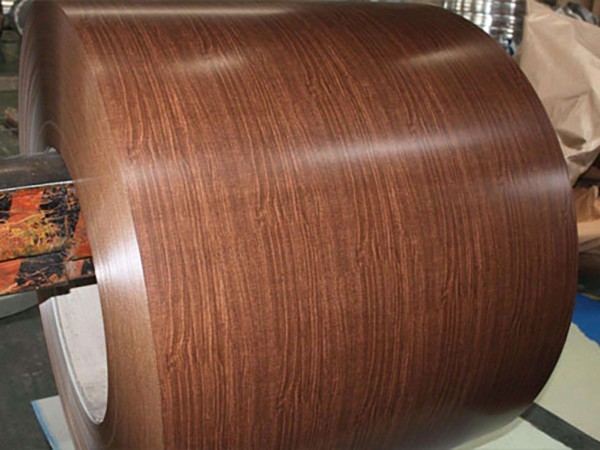
The core technology of four-color printing color steel plate originates from the CMYK color model (cyan, magenta, yellow, black) in the printing industry. Through digital control, four-color inks are proportionally stacked to form over 16.7 million color combinations on the surface of metal substrates. Its technological implementation needs to break through three key links:
1.1 Substrate pretreatment: building an ideal carrier for color adhesion
The surface state of metal substrates directly affects ink adhesion and color saturation, and requires multi-level pretreatment:
-Degreasing cleaning: alkaline cleaning agent is used to remove surface oil stains, and the cleaning temperature is controlled at 60-70 ℃ to ensure that the surface tension of the substrate is ≥ 38mN/m.
-Chemical conversion: By phosphating or silane treatment, a 0.5-2 μ m conversion film is formed to enhance the adhesion between the coating and the substrate, and the salt spray resistance is improved to over 1000 hours.
-Micro arc oxidation (optional): Form a porous ceramic oxide film on an aluminum magnesium alloy substrate, with a porosity controlled at 15% -20%, to provide mechanical anchoring points for ink.
1.2 Four color printing system: achieving micrometer level color control
Four color printing equipment needs to integrate high-precision servo control system and intelligent color management module:
-Printing accuracy: Using a nozzle with a resolution of 360dpi (dots per inch) or higher, the ink droplet size is controlled within 3-15pl (picoliters), achieving clear presentation of 0.1mm level lines.
-Color calibration: Real time monitoring of the Lab value of printed samples through a spectrophotometer, automatic adjustment of ink ratio, ensuring color difference Δ E ≤ 1.5 between batches.
-Overprint accuracy: Adopting a closed-loop tension control system, the overprint error of multi-color printing is ≤ 0.05mm, avoiding moir é patterns caused by color overlap.
1.3 Curing Technology: Lock in the Durability of Colors
Ink curing requires a balance between adhesion and weather resistance, and there are two commonly used technical routes:
-UV curing: Using UV ink containing photoinitiators, instantaneous curing is achieved through mercury lamps or LED light sources, with a curing time of less than 0.5 seconds, suitable for high-speed production lines.
-Heat curing: Using epoxy resin based ink, bake at 180-220 ℃ for 15-20 minutes to form a cured film with a cross-linking density greater than 85%, and improve scratch resistance by three times.
2.Process advantages of four-color printed color steel plate: breakthrough in performance beyond traditional coatings
Compared to monochrome or two-color coated steel plates, four-color printing technology has achieved comprehensive upgrades in decoration, functionality, and economy, forming five core advantages:
2.1 Color Expression: Visual Transition from Plane to Stereoscopic
-Gradient transition: Through the gradient superposition of four-color ink, a natural gradient effect is achieved on the metal surface, such as the three-dimensional texture of imitation stone and wood grain, with a color transition error of ≤ 5%.
-Metallic texture: Add aluminum powder or pearl powder to the ink to give the printed layer a metallic luster, and the glossiness can be adjusted within the range of 10-90GU (gloss unit).
-Special effect: By using local UV or matte treatment, a glossy contrast is formed on the same board, enhancing the sense of design hierarchy.
2.2 Weather resistance: reliable guarantee for outdoor applications
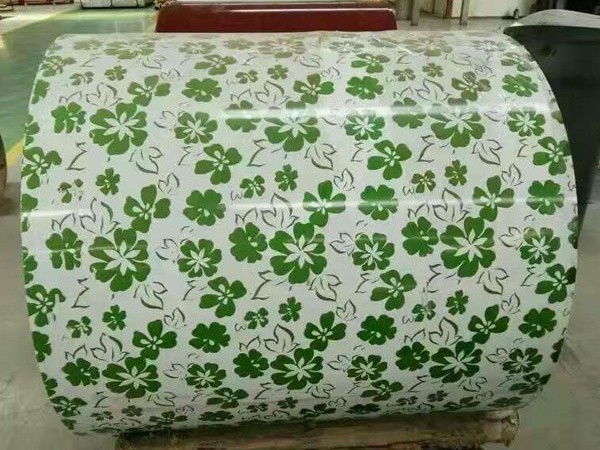
-UV protection: Add nano titanium dioxide (TiO ?) light stabilizer to the ink, so that the color difference Δ E of the board after 5 years of outdoor exposure is ≤ 3 (in accordance with ASTM D2244 standard).
-Corrosion resistance: The cured coating has a density of ≥ 98% and can withstand salt spray testing for up to 2000 hours without corrosion (ISO 9227 standard), making it suitable for coastal or highly polluted environments.
-Temperature resistance: The thermosetting coating can withstand temperature cycles of -40 ℃ to 150 ℃ for a long time, suitable for cold chain equipment or high-temperature industrial scenarios.
2.3 Production Efficiency: Cost Advantage of Large Scale Manufacturing
-Short cycle production: It only takes 4-6 hours from the substrate to the finished product, which shortens the production cycle by 60% compared to traditional spraying processes.
-Material utilization rate: Digital printing achieves zero waste typesetting, with a material utilization rate of over 98%, reducing raw material consumption by 15% compared to traditional stamping processes.
-Energy consumption control: The energy consumption per unit area of UV curing process is only one-third of that of thermal curing process, which is in line with the trend of green manufacturing.
2.4 Environmental performance: full cycle carbon reduction from production to recycling
-VOC emission reduction: The VOC (volatile organic compound) content of water-based UV ink is less than 50g/L, which is more than 90% lower than that of solvent based ink and meets the requirements of the EU REACH regulation.
-Heavy metal control: The content of heavy metals such as lead, cadmium, and mercury in ink meets RoHS standards to ensure that the product is harmless to human health and the environment.
-Recyclability: The bonding strength between the printing layer and the metal substrate is ≤ 0.5N/mm, which facilitates later sorting and recycling, and the metal recovery rate can reach 95%.
3.Application scenarios of four-color printed color steel plates: cross industry solution providers
With its dual advantages of decoration and functionality, four-color printed color steel plate has penetrated into multiple high-end manufacturing fields and become a key material for industry upgrading
3.1 Architectural Decoration Field: Aesthetic Innovation of Curtain Wall and Interior
-Curtain wall system: By imitating stone and wood grain printing, the visual unity of glass curtain walls and metal curtain walls is achieved, reducing building energy consumption by more than 20%.
-Interior decoration: Apply matte texture printing in elevator cars, ceilings, and other scenes to create a quiet atmosphere in high-end business spaces.
-Alien components: Combined with laser cutting technology, achieve color continuity on curved or folded components, breaking through the limitations of traditional coating processes.
3.2 Home appliance industry: visual weapon for product differentiation
-Refrigerator panel: Adopting gradient colors and metal wire drawing effect, the product's premium ability is increased by 30%, and the market share is increased by 15%.
-Air conditioning outdoor unit: By replacing traditional spraying with a weather resistant printing layer, the equipment's lifespan is extended to 15 years, reducing maintenance costs by 40%.
-Small household appliance shell: Apply high gloss printing on products such as coffee machines and ovens to enhance brand recognition and help products compete overseas.
3.3 Transportation Equipment: Dual Breakthrough of Lightweight and Personalized
-Interior of new energy vehicles: Apply tactile printing technology to the interior panels of car doors, instrument panels, and other parts to achieve a dual upgrade of visual and tactile senses.
-Rail transit vehicles: Replace traditional decorative panels with fire-resistant printed color steel plates (with a fire resistance limit of ≥ 30 minutes) to reduce vehicle weight by 10%.
-Ship interior: Apply anti mold printing layers in areas such as cabins and corridors to meet the high humidity requirements of marine environments and extend the renovation cycle to 8 years.
4.The development trend of four-color printed color steel plate: dual drive of technological iteration and market expansion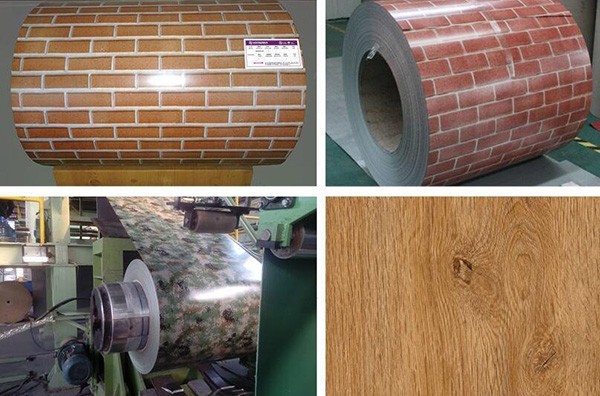
With the integration of materials science and digital technology, four-color printed color steel plates are evolving towards higher precision, wider applications, and greater sustainability
4.1 Deep integration of digital processes
-AI color design: By analyzing design trends through machine learning, automatically generating color schemes that meet market demand, reducing research and development cycles by 50%.
-3D printing technology: Developing multi-layer stereoscopic printing processes to achieve synchronous simulation of touch and vision on metal surfaces, such as simulating the unevenness of leather textures.
-Blockchain traceability: Establish a complete data chain from substrate to finished product to ensure the traceability of color data and production parameters, meeting the customized needs of high-end customers.
4.2 Construction of New Material System
-High performance substrate: Developing printing adaptation processes for high-strength steel (yield strength ≥ 800MPa) and lightweight aluminum alloy (density ≤ 2.7g/cm 3) to expand application scenarios.
-Functional ink: Develop special inks such as self-cleaning, antibacterial, and conductive to enable printed color steel plates to have environmental responsiveness, such as automatic cleaning function in rainy days.
-Composite structure: the printing layer is compounded with lightweight structures such as honeycomb panel and foam aluminum to form a new material with decorative and mechanical properties.
4.3 Continuous Promotion of Green Manufacturing
-Bio based ink: Using vegetable oil instead of mineral oil as the ink carrier, increasing the proportion of renewable materials to over 60% and reducing carbon footprint.
-Closed loop recycling system: Establish a printing color steel plate recycling network, separate ink and metal through chemical peeling technology, and achieve 100% recycling.
-Zero carbon factory: adopting photovoltaic power generation and carbon capture technology to reduce carbon emissions in the production process to zero, in compliance with the EU Carbon Tariff (CBAM) requirements.
The four-color printed color steel plate redefines the decorative boundaries and functional limits of metal materials through technological integration and innovation. From the visual shock of building curtain walls to the differentiated competition of household appliances, from the lightweight upgrade of transportation to the sustainable practice of green manufacturing, its application scenarios continue to expand and its technological value continues to be released. With the advancement of digitalization, intelligence, and green trends, four-color printed color steel plates will inevitably usher in a broader development space and become a key force in promoting high-quality development of the manufacturing industry.

 Language


 Address:Bo Xing County, Shandong Province
 E-mail: