Color coated roll,in simple terms,is a type of metal coil with a colored coating on its surface.It plays a crucial role in many fields such as construction,home appliances,and automobile manufacturing.From exterior wall decoration of buildings,to shell production of household appliances,to the creation of automotive components,color coated rolls add a unique charm to these products with their unique performance and diverse colors.It not only has good corrosion resistance and can effectively extend the service life of products,but also meets the diverse needs of different industries for appearance design.Next,let's delve into more characteristics and applications of color coated rolls.
1.Definition and classification of color coated rolls:structural analysis from substrate to coating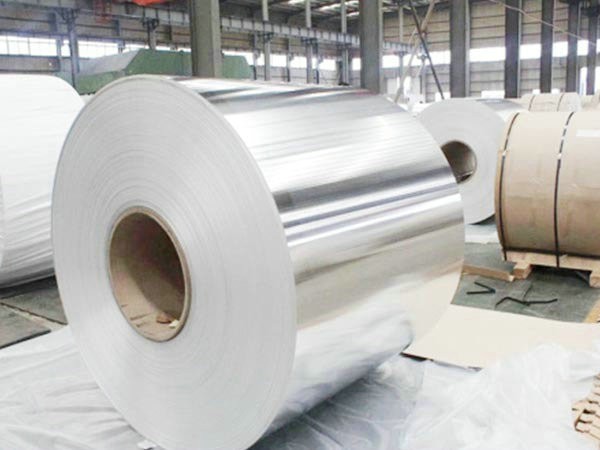
Color coated roll is a composite material made of metal coil as the substrate,which forms one or more layers of organic coatings on the surface through continuous coating process.Its structure can be divided into three layers:substrate,primer,and topcoat
1.Substrate selection:
-Cold rolled steel plate:Made from low-carbon steel through cold rolling process,with a smooth surface but weak corrosion resistance,it needs to be galvanized or coated to enhance its protective performance.
-Galvanized steel plate:Galvanized(hot-dip galvanized or electroplated galvanized)on the surface of cold-rolled steel plate,with a zinc layer thickness of 5-20μm,can form sacrificial anode protection,significantly improving corrosion resistance.
-Aluminum zinc coated steel plate:coated with aluminum zinc alloy,with corrosion resistance 2-6 times that of hot-dip galvanizing,suitable for high humidity or corrosive environments.
-Stainless steel plate:mainly composed of alloy elements such as chromium and nickel,with excellent corrosion resistance,but high cost,mostly used for high-end decoration or special working conditions.
2.Coating system:
-Primer:usually epoxy resin or polyurethane coating,with a thickness of 3-5μm,mainly used to enhance the adhesion between the substrate and the topcoat,and provide preliminary anti-corrosion protection.
-Topcoat:Select materials such as polyester,silicon modified polyester,high weather resistant polyester,polyvinylidene fluoride or plastic sol according to functional requirements,with a thickness of 15-25μm,to determine the decorative,weather resistant and chemical resistance of the color coated roll.
3.Classification method:
-According to coating type:divided into single-sided coating and double-sided coating,the latter is mostly used in scenarios that require double-sided protection.
-According to surface condition:divided into ordinary coating,printed coating,and embossed coating.
-According to usage:divided into color coated rolls for construction,household appliances,and transportation.
2.The production process of color coated rolls:precise control from raw materials to finished products
The production of color coated rolls requires six core processes:"unwinding→pretreatment→coating→baking→cooling→winding",each of which affects the performance and quality of the final product
1.Uncoiling and Stitching:
Install the metal coil(usually 600-1500mm wide)onto the unwinding machine,maintain the flatness of the plate through a tension control system,and weld the tail of the previous roll to the head of the next roll through a sewing machine to achieve continuous production.
2.Surface pretreatment:
-Degreasing:Use alkaline cleaning agents to remove oil stains,dust,and iron oxide scales from the surface of the substrate,ensuring the adhesion between the coating and the substrate.
-Chemical conversion:A layer of chemical conversion film(thickness 1-3μm)is formed on the surface of the substrate through phosphating or chromate treatment,which improves corrosion resistance and enhances coating adhesion.
-Passivation:Apply chromium free passivation solution(such as silane passivator)on the surface of galvanized steel plate to replace traditional chromate passivation,which meets environmental requirements.
3.Coating process:
-Roller coating method:The coating is uniformly transferred to the surface of the substrate through a coating roller,suitable for large-scale continuous production,with high precision in controlling coating thickness(±1μm).
-Spraying method:using high-pressure airless spray gun or electrostatic spraying technology,suitable for complex shapes or small batch production,but the coating utilization rate is relatively low(about 60%-70%).
-Coating sequence:Usually,the primer is applied first,followed by the topcoat;If higher corrosion resistance is required,intermediate paint(such as zinc rich primer)can be added between the primer and topcoat.
4.Baking and curing:
-Send the coated board into an oven and heat it up to 180-250℃through infrared or hot air circulation,causing the solvents in the coating to evaporate and the resin to crosslink and solidify,forming a dense coating.
-The baking time should be adjusted according to the type of coating and the thickness of the board(usually 10-30 seconds)to avoid coating embrittlement caused by over baking or insufficient adhesion caused by under baking.
5.Cooling and winding:
-Cool the board to room temperature through a water or air cooling system to prevent coating softening or deformation at high temperatures.
-After cooling,use a tension control system to roll the sheet into a coil with a diameter of usually 500-1000mm,which is convenient for transportation and subsequent processing.
3.The core characteristics of color coated rolls:performance advantages determine application scenarios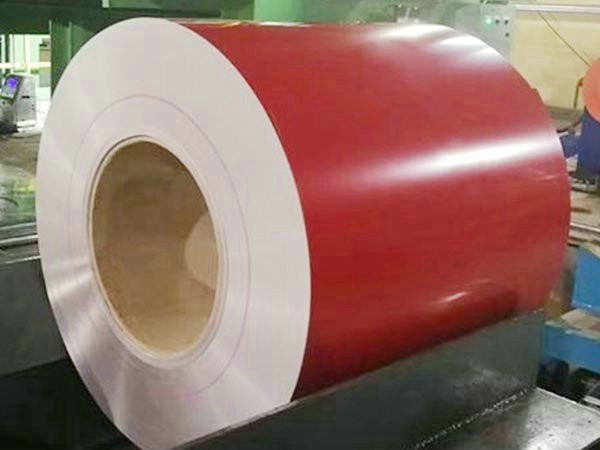
The performance advantages of color coated rolls stem from the synergistic effect of their substrate and coating,mainly reflected in four aspects:corrosion resistance,decorative properties,processability,and environmental friendliness:
1.Corrosion resistance:
Galvanized or aluminum zinc coated substrates provide basic protection,while coatings further isolate contact with water,oxygen,and corrosive media such as chloride ions and sulfides.
The corrosion resistance of different coating systems varies significantly:PVDF coating(fluorocarbon coating)has a salt spray resistance test of over 5000 hours and is suitable for coastal or highly polluted environments;The salt spray resistance test of ordinary polyester coating(PE)is usually 500-1000 hours,suitable for inland dry environments.
2.Decorative:
The color of the topcoat can be diversified through RAL color cards or customized by customers(such as solid color,metallic color,pearlite color)to meet the aesthetic needs of fields such as architecture and home appliances.
Printing and embossing techniques can simulate natural materials such as wood and stone patterns or create abstract patterns,enhancing the added value of products.
3.Processing capability:
Color coated rolls can undergo cold processing such as stamping,bending,shearing,and welding,and the coating is not easily peeled or cracked during the processing,making them suitable for the manufacturing of complex structural components.
The balanced design of coating hardness(usually 2H-3H)and flexibility(elongation>15%)ensures that surface integrity can still be maintained after processing.
4.Environmental friendliness:
Modern color coated roll production uses water-based or solvent-free coatings,with volatile organic compound emissions below 50g/m2,in compliance with EU RoHS and China's ten ring certification standards.
The coating does not contain heavy metals such as lead and mercury,and can be recycled after disposal to reduce environmental pollution.
4.Typical application of color coated rolls:covering all fields from construction to transportation
Color coated rolls,with their comprehensive performance advantages,are widely used in four major fields:construction,home appliances,transportation,and packaging,becoming an indispensable basic material for modern industry
1.In the field of architecture:
-Roofs and walls:Metal roof panels made of color coated rolls(such as upright seam roof systems)have the characteristics of light weight,fast construction,and strong weather resistance,and are suitable for industrial plants,warehouses,and commercial buildings.
-Curtain wall decoration:Fluorocarbon coated PVDF roll is used for high-rise building curtain walls,which can resist UV rays,acid rain,and wind erosion,and maintain stable color for more than 10 years.
-Steel structure protection:As an anti-corrosion coating for steel structure bridges and towers,color coated coils can extend the service life of the structure to more than 30 years.
2.In the field of household appliances:
-Shell manufacturing:Color coated rolls are used for the shells of household appliances such as refrigerators,washing machines,and air conditioners,providing scratch resistant,fingerprint resistant,and easy to clean surface properties.
-Internal components:Some household appliances use color coated coils for internal brackets,rails,etc.,replacing traditional galvanized sheets to enhance corrosion resistance and aesthetics.
3.Transportation sector:
-Container manufacturing:The container body,door panels,and frame are made of highly weather resistant color coated rolls,which can resist salt spray corrosion in marine environments and have a service life of 15-20 years.
-Vehicle interior:Color coated rolls are used on the inner walls and ceilings of passenger cars and train carriages to provide fire resistance,moisture resistance,and antibacterial properties,enhancing passenger comfort.
4.Packaging field:
-Metal packaging cans:Color coated rolls are used for metal packaging cans of food,beverage,and chemical products.The coating must comply with FDA standards to ensure non-toxic and harmless properties.
-Pallets and shelves:Lightweight color coated rolled pallets can replace wooden pallets,reduce forest resource consumption,and have stronger corrosion resistance,making them suitable for cold chain logistics.
In short,color coated rolls have become an indispensable material in many industries due to their excellent performance and wide applications.Whether it is the construction industry that pursues product durability,or the home appliance and automotive manufacturing fields that focus on exterior design,color coated rolls can perfectly handle it.With the continuous advancement of technology,the performance of color coated rolls will continue to improve and their application scope will become more extensive.I believe that in the future,color coated rolls will continue to shine and heat up in the industrial field,bringing more convenience and beauty to our lives.

 Language


 Address:Bo Xing County, Shandong Province
 E-mail: